
News · Knoxville
TDOT’s West Knoxville I-40/I-75 study recommends two options: one more free lane each way, or two Choice Lanes each way raised near Papermill
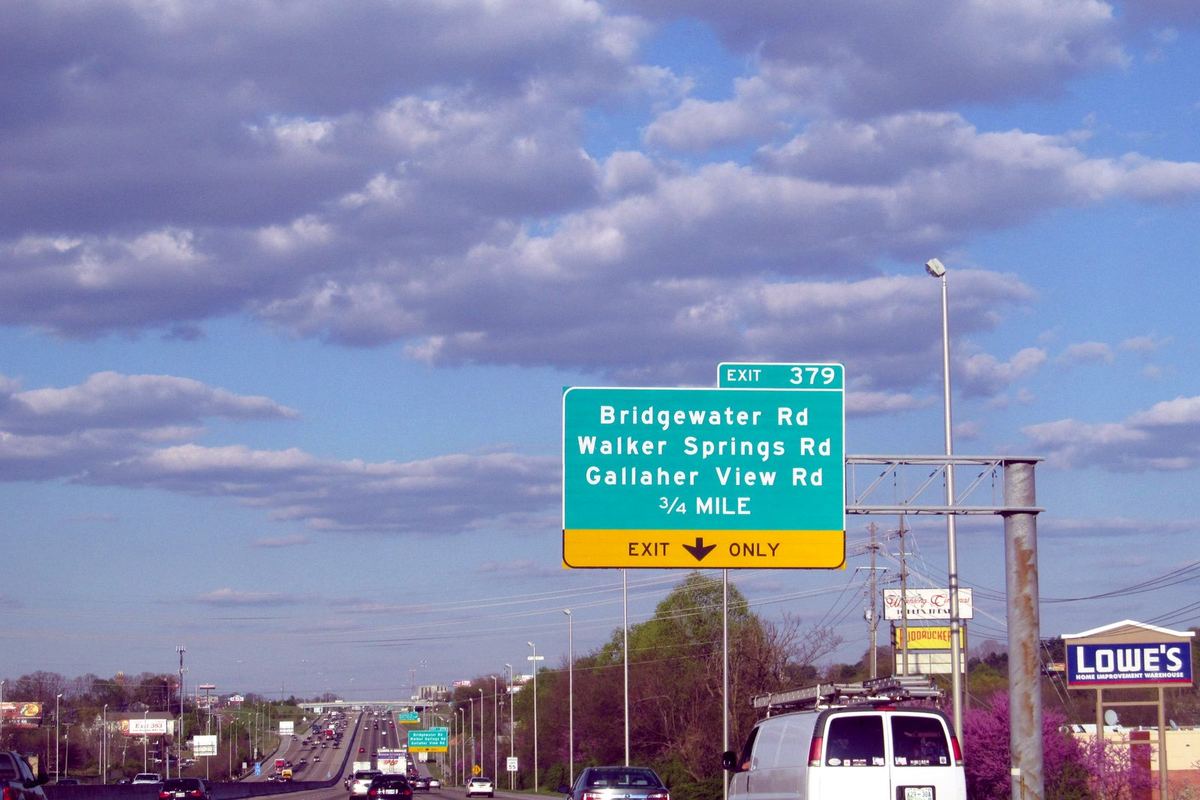
KNOXVILLE — The Tennessee Department of Transportation has narrowed its long look at the crowded I-40/I-75 corridor in West Knoxville to two options: widen the interstate with one more regular lane in each direction, or add two Choice Lanes, which charge a toll that rises and falls with traffic, in each direction.
The recommendations come from TDOT’s I-40/I-75 West Knoxville Corridor Planning and Environment Linkages, or PEL, study, which covers about 17 miles from the I-40/I-75 interchange in Loudon County to the I-640 interchange just west of downtown, through Anderson, Knox and Loudon counties. TDOT lists the two in no particular order.
The public can comment through Thursday, Nov. 26.
The two options
The general purpose widening option would add one free lane in each direction for most of the corridor and fix design problems such as short merge and weave areas and narrow shoulders. It would run from just west of the I-40/I-75 split westbound, and from Watt Road eastbound, to the bridge over Middlebrook Pike.
The Choice Lanes option, which TDOT calls Papermill Elevated, would add two priced lanes in each direction while keeping every existing lane free. TDOT says the toll would use dynamic pricing to manage demand, and drivers could always stay in the free lanes. The lanes would be at ground level except for about two miles from east of Cedar Bluff Road to east of Papermill Drive, where they would be raised to limit right-of-way takings at the interchanges. TDOT’s first Choice Lanes project is on I-24 between Nashville and Murfreesboro; we covered the I-24 Choice Lanes financing deal last week.
What it costs, and what happens next
TDOT stresses that a PEL recommendation is not a commitment: before either option becomes a project, the state must find and set aside money for it. The agency’s 10-year plan already funds two interchange projects in the corridor, and both options were designed to work with them, TDOT says. The Federal Highway Administration is reviewing the study, and TDOT plans to carry the results into later federal environmental reviews.
Congestion already carries a price tag: a University of Tennessee study found Knoxville-area traffic costs about $294 million a year.
Comments can be emailed to westknox@publicinput.com, left at 1-855-925-2801 (project code 11074), or mailed to TDOT’s Nashville office. Printed study documents are available until Nov. 26 at the Lenoir City Public Library, the Farragut Branch Library and the Bearden Branch Library.
Sources:
Tennessee Department of Transportation, “West Knoxville Corridor” project page (study area, recommended alternatives, funding, FHWA review, comment deadline and methods, library locations), https://www.tn.gov/tdot/projects/projects-region-1/west-knoxville-corridor.html
Tennessee Department of Transportation, “Preliminary PEL Recommended Alternatives” public meeting board (June–July 2026), https://www.tn.gov/content/dam/tn/tdot/infoonprojectsregion1/west-knoxville-corridor/2026-public-meeting-displays/135384.00_I40I75%20WKC_PELStudy_PIMR2_062926_Prelim%20PEL%20Rec%20Alternatives.pdf
Photo: Doug Kerr, “Interstate 40-75 - Walker Springs Knoxville (2014).jpg,” Wikimedia Commons (CC BY-SA 2.0), https://commons.wikimedia.org/wiki/File:Interstate_40-75_-_Walker_Springs_Knoxville_(2014).jpg
