
News · Murfreesboro
Murfreesboro keeps its Flock cameras as residents push back and police defend the system
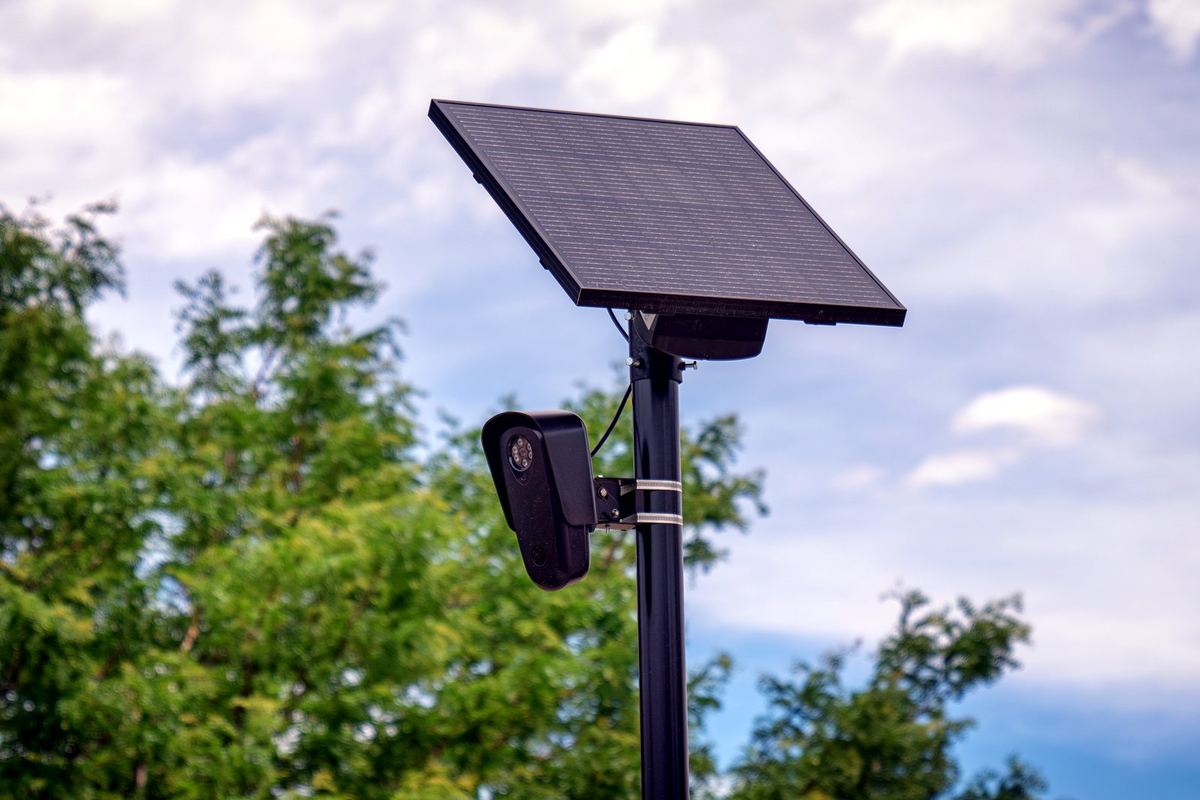
MURFREESBORO, Tenn. — Murfreesboro has kept its Flock Safety cameras even as a group of residents keeps pressing the City Council to drop them, WPLN News reported Thursday.
An online petition to “block Flock” circulated this summer. Instead, the council in June unanimously approved a two-year, $243,898 renewal of the city’s Flock contract for the company’s Raven gunshot detection system, the Nashville Scene reported. Police Chief Michael Bowen told the Scene that the gunshot sensors are a separate system from the license plate readers and cover roughly five of the city’s 64 square miles.
Steven Gavel, who spoke against the cameras at a City Council meeting, told WPLN he does not feel heard. “I am very much against mass surveillance,” Gavel said. “I think that it breaks our Fourth Amendment rights.”
In September, the police department dropped a plan to link its drone software with Flock’s system after community backlash, WSMV reported. The council approved DroneSense software licenses for two newly purchased drones without the Flock link. “In hindsight, the Flock component should have been eliminated from the get-go,” Bowen told the council. He said the department has no plans for a drone-as-first-responder program and that its drones are flown by pilots at the scene.
Bowen told the council the department has tried to take the public’s privacy into account. “I think we’ve been pretty open and transparent,” he said, according to WPLN.
The department now has two dozen Flock license plate readers, a gunshot detection system and more than 70 other cameras around the city, WPLN reported. Ryan Lawrence, who supervises the Real-Time Crime Center, said the cameras have produced more than 600 “success stories” this year, including more than 100 cleared cases and some arrests. “There’s a lot of misinformation out there on social media,” he said.
At a June council meeting, officials said license plate reader data is kept for 30 days, access is limited to eight of the department’s 361 sworn officers, searches must be justified and the cameras do not use facial recognition, the Scene reported. Matthew Guariglia, a senior policy analyst at the Electronic Frontier Foundation, told the paper such systems collect information “about everyone” and search it later instead of starting with a suspect.
The debate is not limited to Murfreesboro. Knoxville and Coopertown have ended their use of Flock cameras, and leaders in Lebanon are questioning theirs, according to WPLN.
Sources:
“Flock cameras are dividing Tennessee towns. Here’s the split in Murfreesboro.,” WPLN News / Emily West, Oct. 15, 2026, https://wpln.org/post/flock-cameras-are-dividing-tennessee-towns-heres-the-split-in-murfreesboro/
“Murfreesboro police back off Flock Safety integration as city council approves new drone licenses,” WSMV / Sam Olsen and Braden Ross, Sept. 17, 2026, https://www.wsmv.com/2026/09/18/murfreesboro-police-back-off-flock-safety-integration-city-council-approves-new-drone-licenses/
“Murfreesboro Renews Flock Gunshot Detection System,” Nashville Scene / Nick Pipitone, July 7, 2026, https://www.nashvillescene.com/news/citylimits/murfreesboro-flock-gunshot-detection/article_812d5552-aebf-410e-b72b-a82f5a3db40f.html
Image: Tony Webster, “Flock Safety ALPR Camera,” Wikimedia Commons, CC BY 2.0, https://commons.wikimedia.org/wiki/File:Flock_Safety_ALPR_Camera_(53833285849).jpg
