
News · West Tennessee
West Tennessee deer hunters: what chronic wasting disease rules mean for moving, baiting and testing your deer this season
MEMPHIS — With archery season under way and gun season less than a month off, West Tennessee deer hunters are again working under the state’s chronic wasting disease rules, which cover how a deer can be moved, whether it can be hunted over bait and how to get it tested.
Chronic wasting disease is a fatal brain disease of deer and elk. The Tennessee Wildlife Resources Agency says it is not known to affect humans, pets or livestock, but federal health officials advise hunters not to eat meat from an animal that tests positive.
Season dates. Archery runs through Oct. 30 and again Nov. 2–6, muzzleloader season runs Nov. 7–20, and gun season opens Saturday, Nov. 21, and runs through Jan. 3, according to TWRA’s statewide season summary. Check the agency’s guide for your unit before you go.
Who is in the CWD Management Zone. TWRA’s carcass rules apply in 21 counties: Benton, Carroll, Chester, Crockett, Decatur, Dyer, Fayette, Gibson, Hardeman, Hardin, Haywood, Henderson, Henry, Lake, Lauderdale, Madison, McNairy, Obion, Shelby, Tipton and Weakley. That is nearly all of West Tennessee.
Moving your deer. Inside the zone, a carcass can travel between those counties. But once a whole or field-dressed carcass is in the zone, it can’t leave. Only approved parts may go anywhere in the state: deboned meat; antlers, cleaned skull plates and cleaned skulls; cleaned teeth; finished taxidermy; and hides. Heads with tissue, organs and whole carcasses stay in the zone. Deer killed in other states must also be processed down to approved parts before they come into Tennessee.
Baiting and feeding. Baiting and wildlife feeding are off-limits in the zone and in every other CWD-positive county, a list that adds Dickson, Humphreys, Lewis, Wayne and Williamson. The exception is a Deer Bait Privilege License, sold on GoOutdoorsTennessee.com, which allows hunting deer over bait on private or leased land. Every baiter needs one, regardless of age or license exemptions. Bait must be corn, grain or a product made for deer, scattered rather than piled, with no more than 5 gallons or 25 pounds per site in 24 hours, and no more than one site per 5 acres.
Getting a deer tested. TWRA runs drop-off freezers and works with participating processors and taxidermists. Hunters leave the head, antlers removed, with 6 to 8 inches of neck. Results come by email in about two weeks, longer at the season’s peak, and can be looked up by harvest confirmation number. As of this week, TWRA’s 2026–27 results table already listed 355 samples, most still pending.
Handling tips. The Centers for Disease Control and Prevention suggests these precautions: wear gloves when field dressing, avoid cutting into the brain and spinal cord, bone out the meat, and if you use a processor, ask that your deer be handled separately. Double-bag leftover parts for the trash or leave them where the deer fell.
Our take. Hunters pay for much of Tennessee’s wildlife management through licenses and gear, and they do the testing that tells biologists where the disease is. Following the carcass rules is a small cost to keep CWD from spreading east. Getting a deer tested is free, and it is worth doing.
Sources:
Tennessee Wildlife Resources Agency, “Deer Carcass Transport & Disposal + Baiting & Feeding,” https://www.tn.gov/twra/hunting/cwd/deer-carcass-transport-disposal.html
TWRA, “CWD Testing & Results” (2026–27 results table viewed Oct. 22, 2026), https://www.tn.gov/twra/hunting/cwd/cwd-testing-and-results.html
TWRA, “Regulations & Hunting with CWD,” https://www.tn.gov/twra/hunting/cwd/regulations-and-hunting-with-cwd.html
TWRA, “Summary of Tennessee Hunting and Trapping Seasons Dates,” https://www.tn.gov/twra/hunting/tennessee-hunting-seasons-summary.html
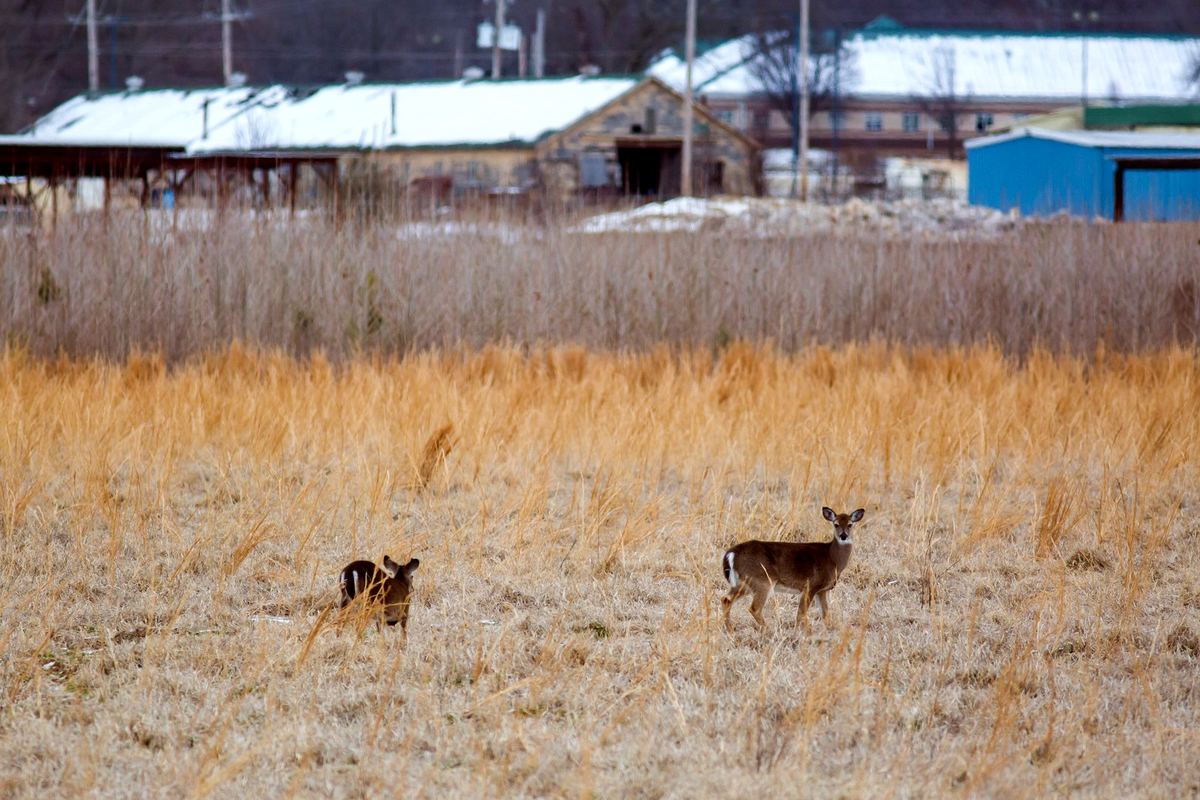
Photo: Melissa McMasters, “White-tailed deer (27972681749),” Wikimedia Commons, CC BY 2.0, cropped and resized, https://commons.wikimedia.org/wiki/File:White-tailed_deer_(27972681749).jpg
