
News · West Tennessee
West Tennessee’s harvest runs ahead of schedule, but farmers are paying about 75% more for diesel than a year ago as extreme drought spreads
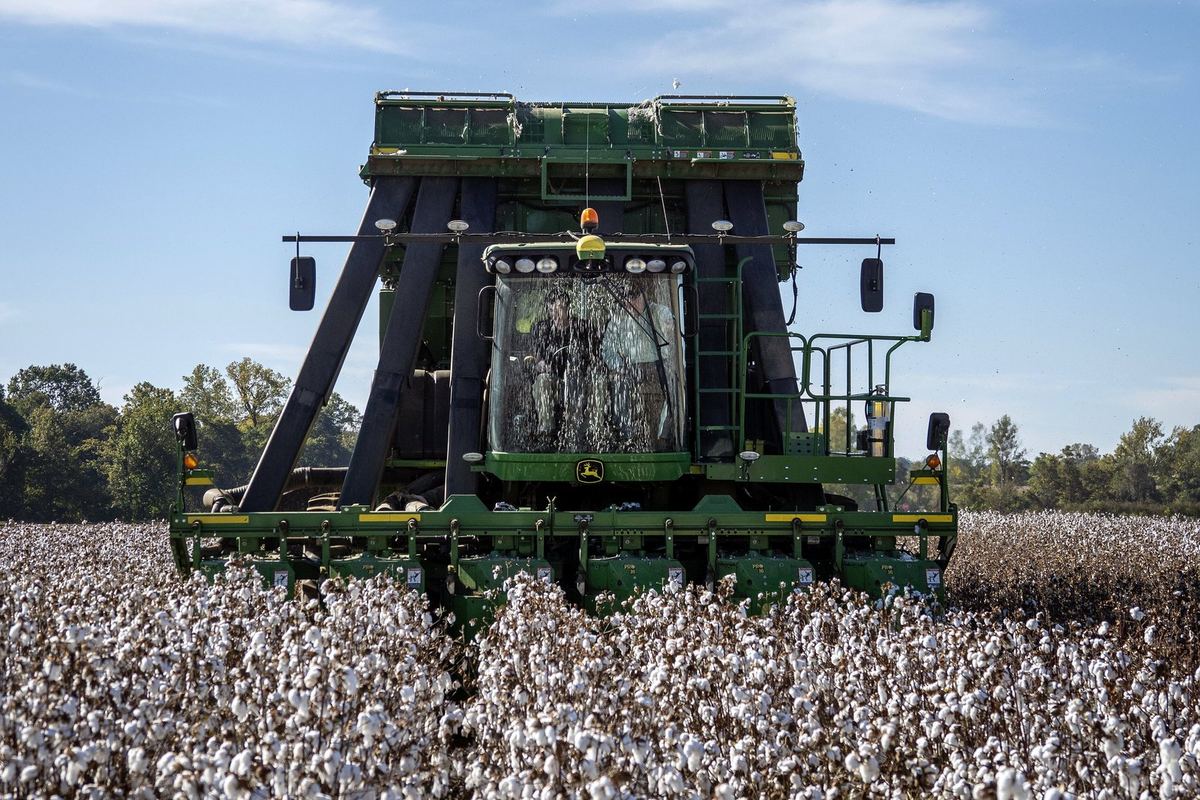
JACKSON — West Tennessee farmers are bringing in this year’s crops faster than usual, but two things are making the harvest harder: diesel prices far above last fall’s, and a dry spell that has turned into extreme drought across much of the region.
“Diesel prices pretty much doubled from last season to this season,” third-generation farmer William Barken, who grows soybeans and wheat, told WBBJ. Combines and tractors run on diesel, and Barken also hauls soybeans, so “you have to pass on the increase to other people,” he said. “In my area, the rain stopped around June. We got a little bit more in August.”
Diesel: up about three-quarters in a year
AAA’s daily averages on Friday, Oct. 30, back up the squeeze, though the increase is closer to three-quarters than double:
- Tennessee: $5.95 a gallon, up from $3.39 a year ago, about 75% higher.
- Jackson area: $6.10, up from $3.52, about 73% higher, or about $2.57 more per gallon.
- Memphis (Tennessee side): $6.06, up from $3.45.
Prices have eased a little since late September. AAA lists Tennessee’s record diesel average as $6.22 on Sept. 22, 2026, and the Jackson area’s as $6.32 on Sept. 21.
Farm trucks have had one break. As we reported Thursday, the state will not enforce its dyed-diesel rules on farm and forestry trucks through Dec. 31, so they can run untaxed red diesel on public roads while hauling crops, livestock or timber.
Drought: from none to nearly all in two weeks
The dry weather Barken described shows up in the U.S. Drought Monitor. On its map valid Oct. 27, 93% of Madison County was in extreme drought (D3), the second-worst category. A week earlier it was 59%, and on the Oct. 13 map none of the county was at that level, though all of it was already in drought.
In Dyer County, extreme drought jumped from about 2% of the county to 66% in one week.
The crop is coming out early
The dry fields have helped the combines keep moving. In USDA’s Crop Progress report released Oct. 26, Tennessee farmers had harvested:
- Soybeans: 81%, compared with a five-year average of 62% for that week.
- Cotton: 67%, compared with 50%.
- Corn: 98%, compared with 90%.
The state had 7 days suitable for fieldwork that week. Pastures tell the other side of the story: 48% of Tennessee pasture and range was rated poor or very poor, which can mean feeding hay early heading into winter.
As the harvest wraps up, Barken said, farmers are watching both the weather and the cost of keeping their operations running.
Sources:
WBBJ, “Diesel prices, lack of rain add challenges to West Tennessee harvest,” Oct. 30, 2026 (Barken interview and quotes), https://www.wbbjtv.com/2026/10/30/diesel-prices-lack-rain-add-challenges-west-tennessee-harvest/
AAA, Tennessee average gas prices, accessed Oct. 30, 2026 (state, Jackson and Memphis diesel averages, year-ago and record prices), https://gasprices.aaa.com/?state=TN
USDA National Agricultural Statistics Service, “Crop Progress,” Oct. 26, 2026 (Tennessee harvest progress, five-year averages, days suitable, pasture condition), https://www.nass.usda.gov/Publications/Todays_Reports/reports/prog4326.txt
U.S. Drought Monitor county statistics (National Drought Mitigation Center), maps of Oct. 13, Oct. 20 and Oct. 27, 2026, Madison and Dyer counties, https://droughtmonitor.unl.edu/
Photo: Preston Keres, U.S. Department of Agriculture, “20191001-OSEC-PJK-00595 TONED.jpg,” Oct. 18, 2019, Halls, Tennessee, Wikimedia Commons, public domain, cropped, https://commons.wikimedia.org/wiki/File:20191001-OSEC-PJK-00595_TONED.jpg
